Headless CMS: managing content sustainably, flexibly and in a structured way
Capture content once in a structured form and deliver it to any channel. What defines content blocks and a headless CMS, and why our stack relies on them.
Content blocks and headless CMS are not new terms. Even so, the difference from a classic content management system is fundamental: content is managed independently of the final format, and the people who maintain it determine its structure, not the layout of a single page.
Content blocks and headless CMS
Content blocks are the building blocks of a page: layout containers and cells that structure the content. They do not determine what the result will look like later. That is exactly why they can be reused in different templates, across all screen sizes.
A headless CMS manages content independently of the output format and delivers it via interfaces. One place for website, shop, app and print template. How the content finally appears is decided by the template of the system that fetches it.
The most common block types
Which blocks are available depends on the project. These are almost always included:
- Text
- Image
- Image and text
- Gallery
- Video
- Divider
- Call to action
- Button
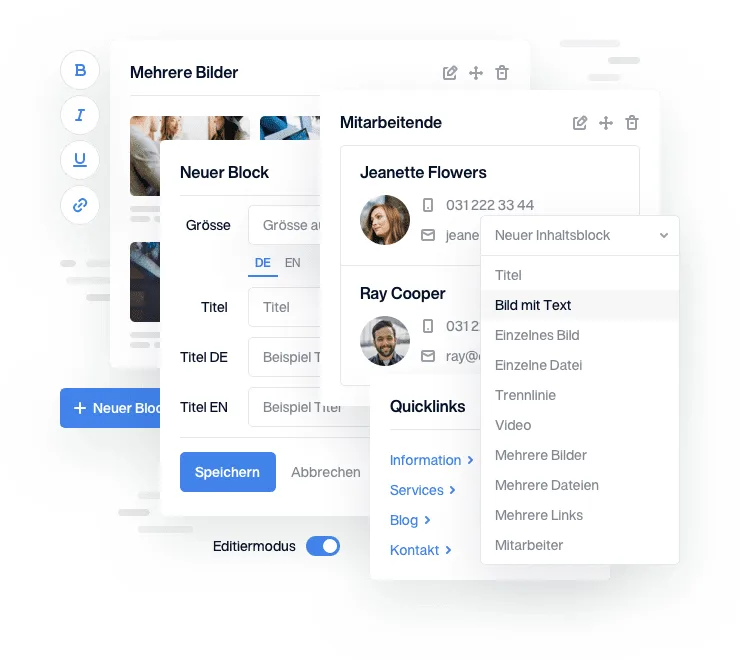
Depending on the use case, further blocks are added, including ones that pull in content from other systems. For example, a product from your shop that is promoted in a blog post.
Six reasons for structured content
- Editing without HTML knowledge, with freedom in how the page is built
- Responsive pages without extra work
- One piece of content serves several channels
- The same message across all channels
- Technically flexible: the front end can be replaced without touching the content
- Portable: whatever exists in structured form can be exported and taken elsewhere
This pays off especially when content appears on several channels: it is maintained in one place, and the same thing appears everywhere.
APIs benefit from structured content
Structured content can be converted into any format. JSON via a REST API is common: third-party systems fetch the content and present it in their own way.
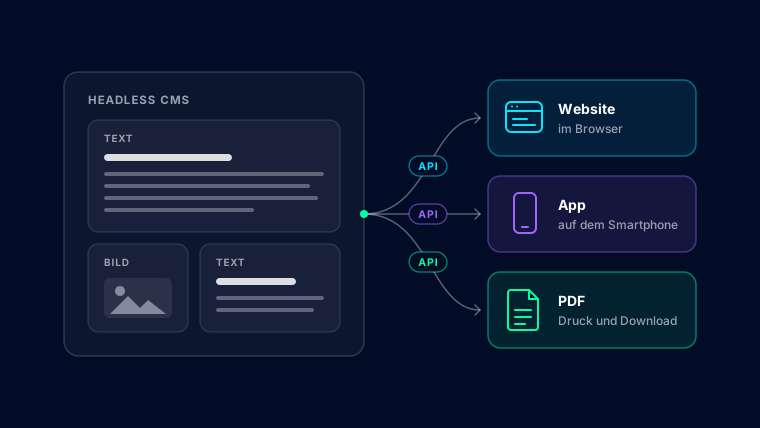
PDFs from the same content
Because structured content follows a schema, it is predictable. PDFs can be generated from it: the same content in one layout on the website and in another in the PDF, available at the click of a button. It is maintained only once.
Headless CMS in our platform stack
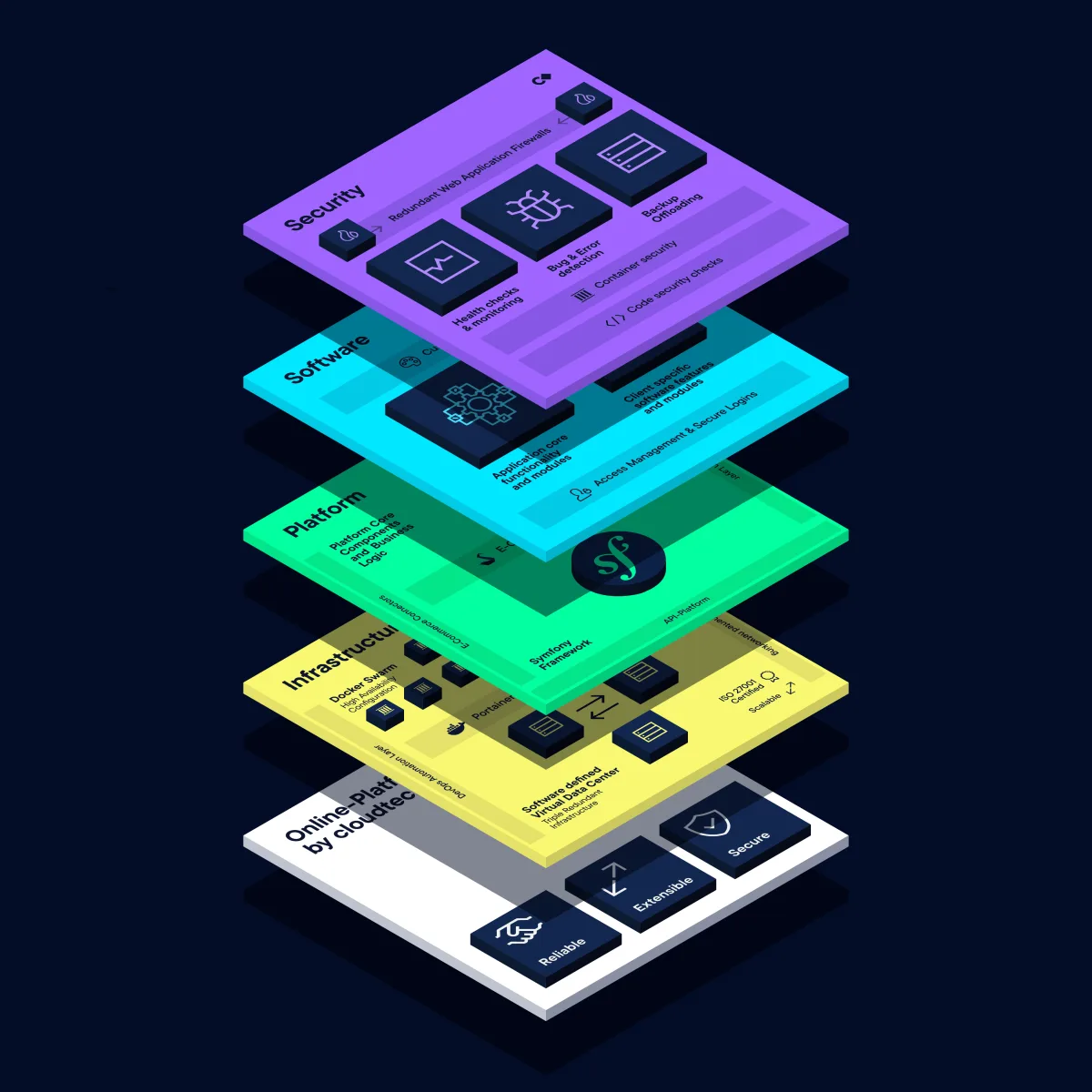
In our stack, the CMS is a module of the platform, not a separate tool alongside it. You maintain structured content yourself, for public pages as well as for areas behind the login, in several languages. Via the REST API, the same content is available to other front ends and systems.
Editing still happens directly on the finished page. For us, headless means that the content can be delivered anywhere, not that editors have to imagine the result.
Capture content in a structured way and you are free to decide later where it appears. That is the gain, not the label ‘headless’.
 Written by
Christian Knellwolf
CEO