
Qualitative
Answers the why: why users behave the way they do, where they get stuck, what they really need.
For us, user-centred design is not a project phase but an attitude that runs through the entire project. From the first stakeholder interviews to user tests after release, we base decisions on real users: researched qualitatively, backed up quantitatively.
The illustration shows the Double Diamond model: two diamonds in a row, each opening out and then converging again. The narrow point in the middle and the result on the right are highlighted.
Human-centred design to ISO 9241-210 means that the people who use your platform every day are at the centre of every project phase. We clarify the problem first, then we build the solution.
Answers the why: why users behave the way they do, where they get stuck, what they really need.

Delivers the how much: how many, how often, how successfully.

Give a reliable picture instead of a gut feeling. Because the most expensive changes are the ones made later to features that were built without regard for users.
In every stage we combine qualitative and quantitative methods, from preliminary analysis through to ongoing operations.
Stakeholder interviews, contextual inquiry and process analysis show where the real problems lie. From these come personas, user journey maps and a jobs-to-be-done picture. Supplemented quantitatively by screening surveys and baseline figures from web analytics.
The insights become wireframes and clickable prototypes, tested early with real users: card sorting and tree testing for the structure, usability tests and think-aloud for the interaction. We iterate until the processes work.
In every implementation step we check the result against the user requirements: UX QA, accessibility checks to WCAG and usability spot checks. Before release comes acceptance testing with your real users.
The most meaningful data comes from live operations: continuous discovery, live A/B tests, analytics, heatmaps and session recordings. SUS and NPS make progress comparable and feed back into further development.
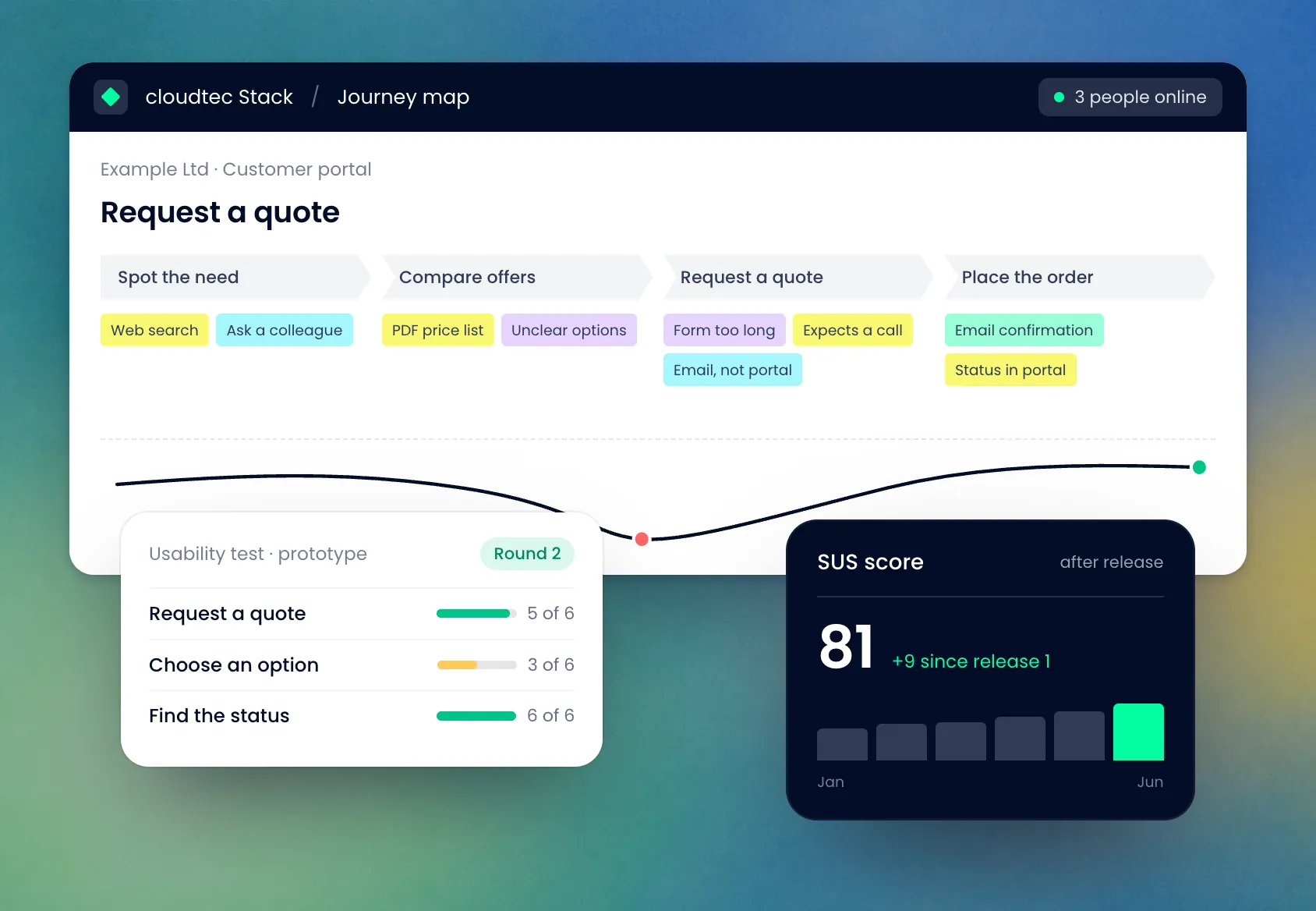
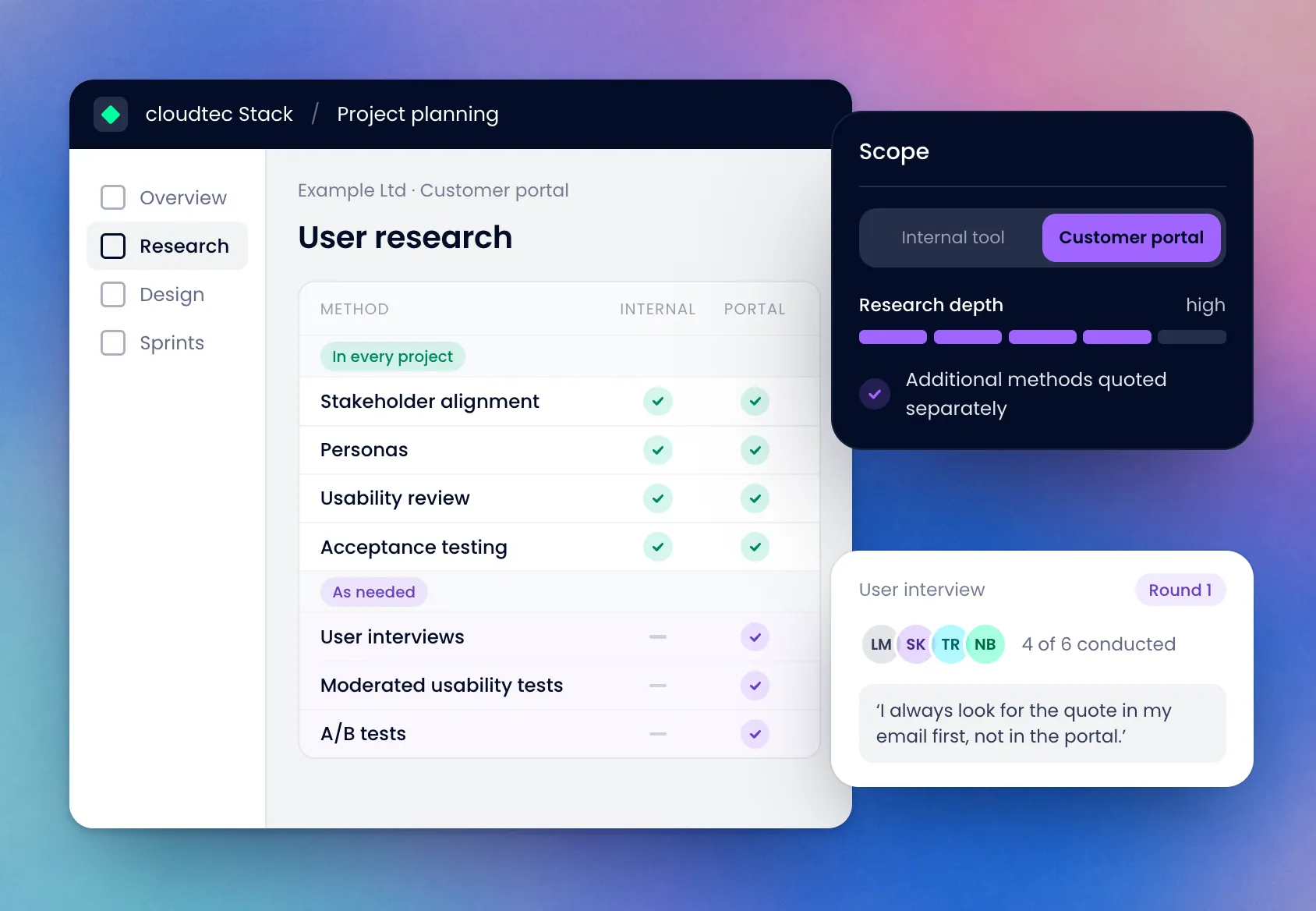
Not every project needs the full depth. For an internal administration tool, structured assumptions, a proven design system and targeted usability spot checks are enough. For a customer-facing portal with a large number of users, we invest considerably more.
Whether it’s a first idea or a running platform: we’ll show you how we involve your users in every decision.