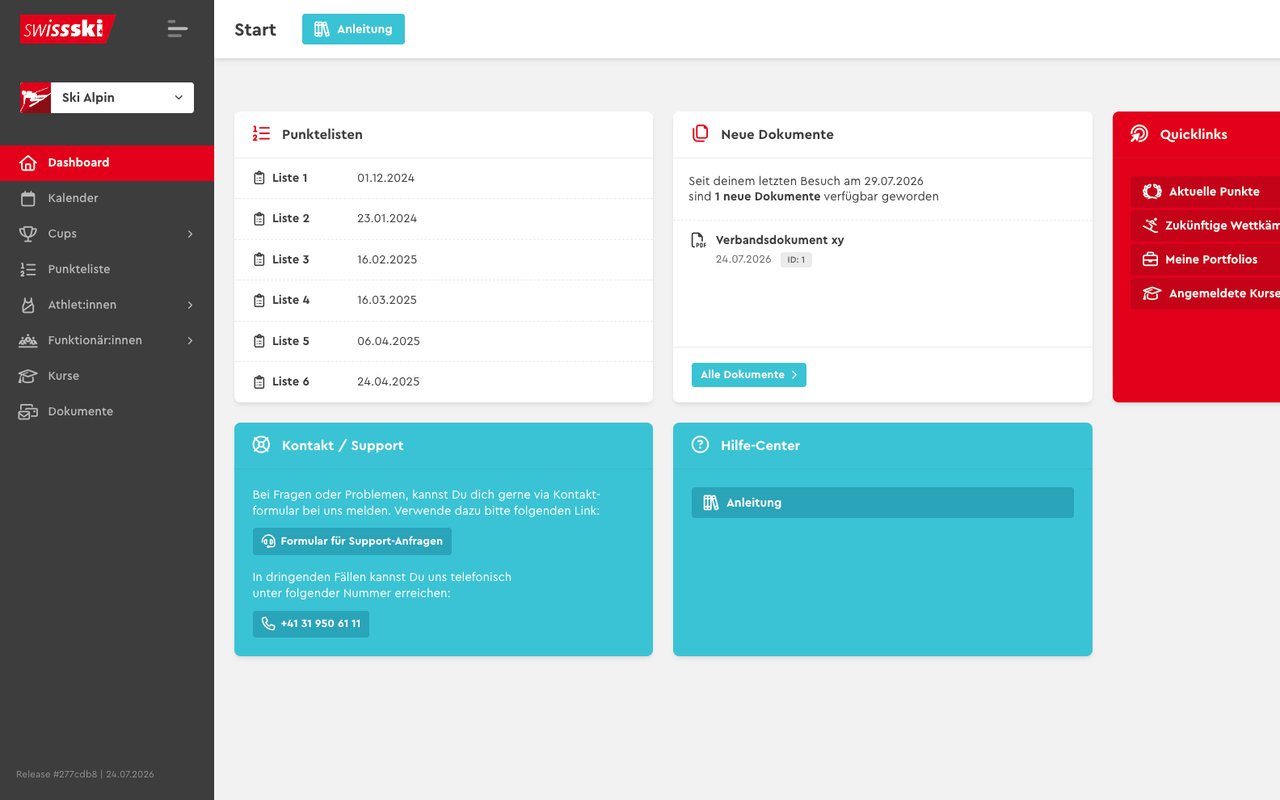
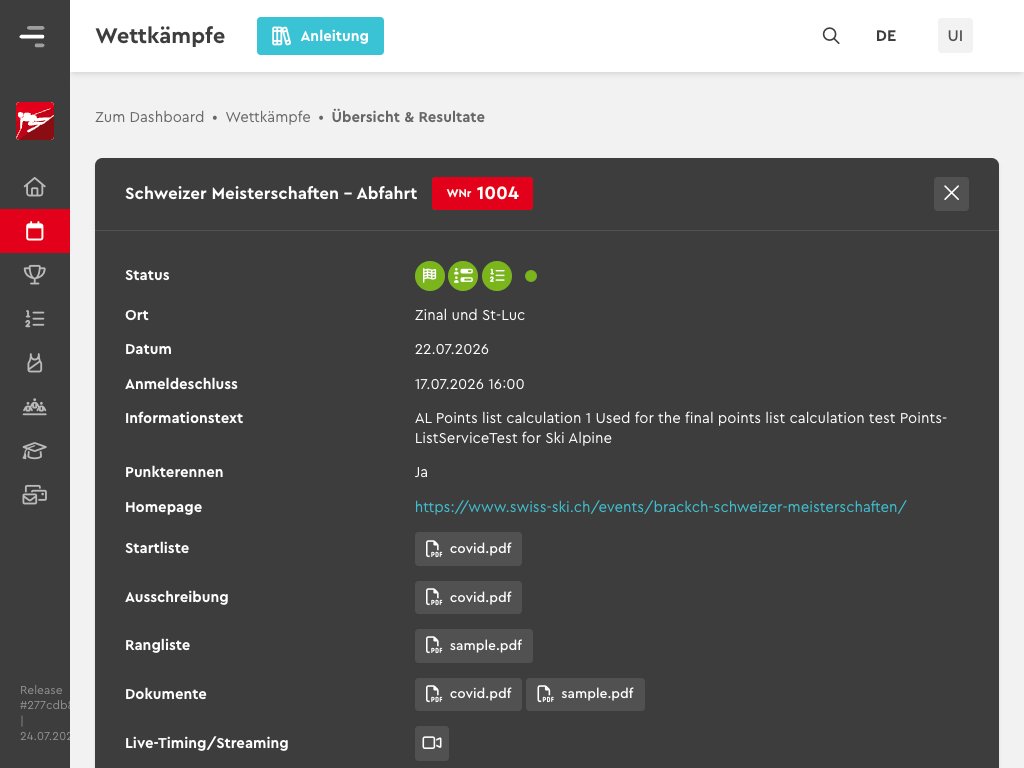
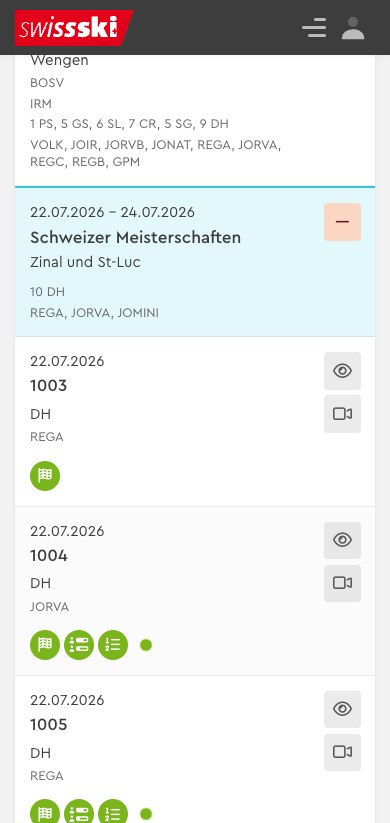
All levels at the table
Requirements came from the federation, regional associations, clubs and organisers. Priorities were set according to their impact on competition operations.
The Swiss-Ski competition database brings a whole season in eleven sports into one system: announcements, registrations, licences, points, cup standings and rankings, from club races to national level.
Competitive sport generates more data in one weekend than some platforms do in a month, and everyone is waiting for the same result.
From club races to the national cup, from alpine skiing to telemark: eleven sports follow different rules and run in the same system.
Every competition goes through the same stages. It is announced, opened for registration, held, evaluated and checked, and at each stage different people work with the same data.
With KWO 2.0, the new version went live in 2025, with the existing data going back to the 2004/05 season. Other Swiss-Ski systems obtain the data via an API with separate access for each application.
After the race, the results are uploaded as an Integral file and only published once approved. From them, the platform calculates points and race penalty, maintains five points lists per season and the cup standings according to the rules of each cup. For times during the race, each competition links to Swiss-Ski’s live timing.
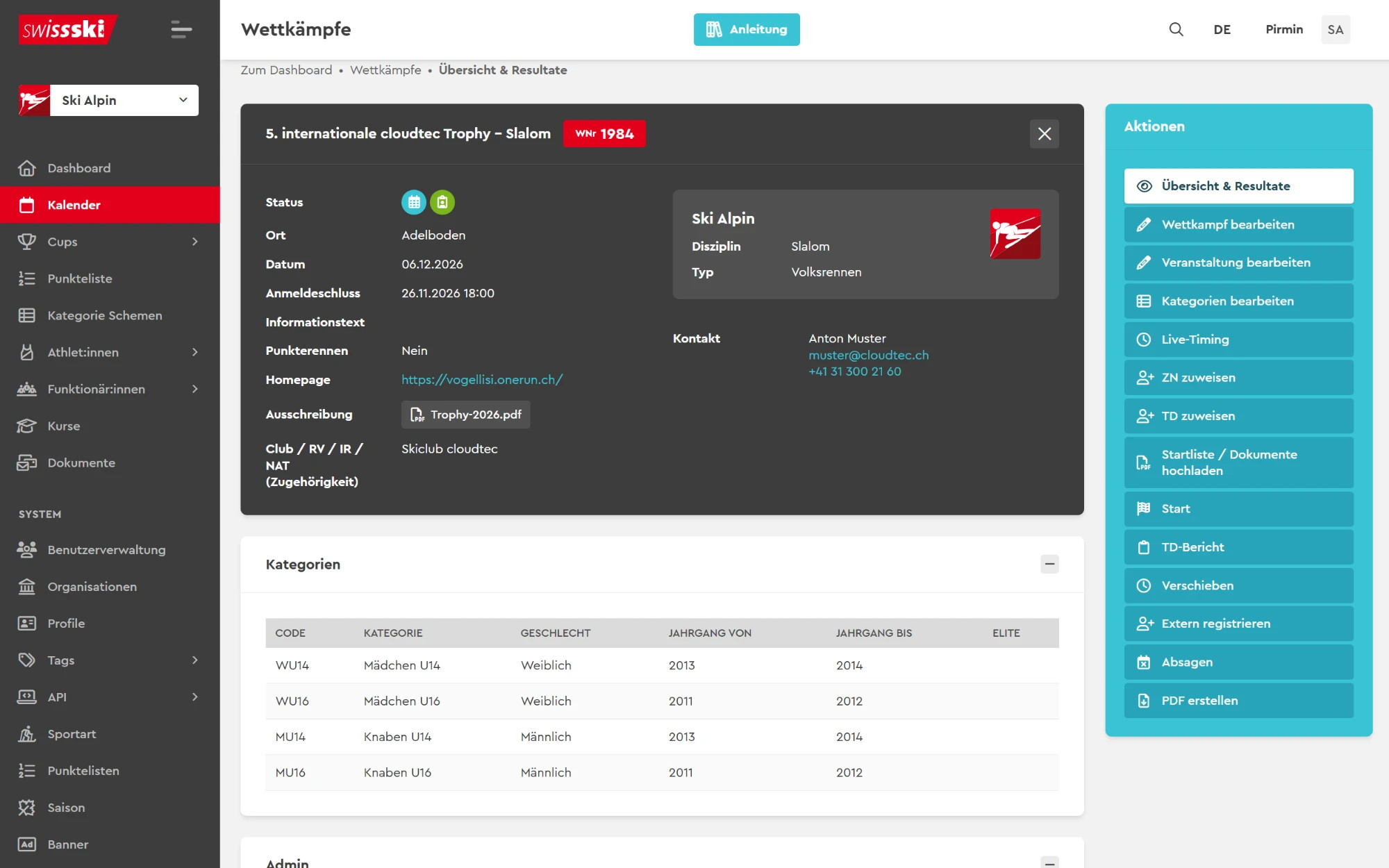
For organisers, clubs, officials and the federation, each with a view of the same data, with roles that allow exactly what is needed.
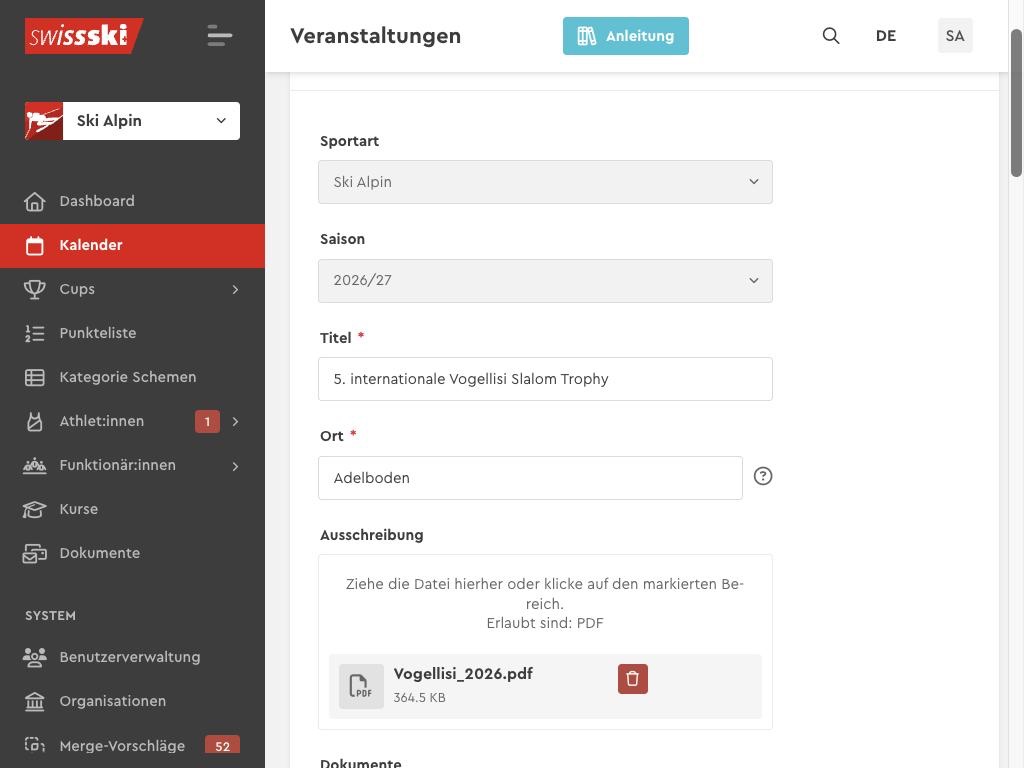
Organisers enter their event with its announcement and create the individual competitions within it. The categories come from fixed schemes for each competition type.
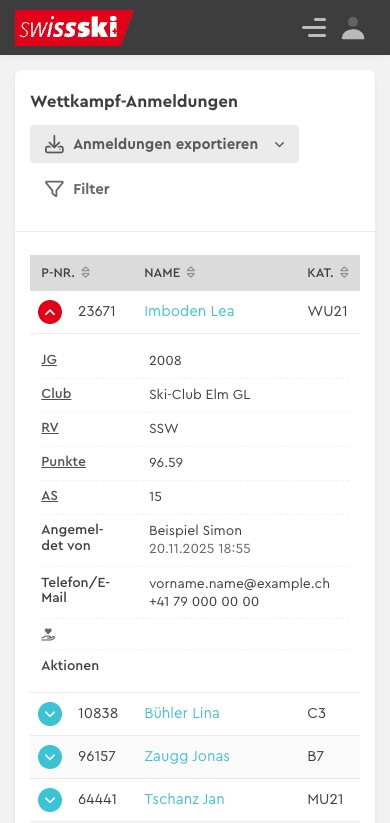
Submitted announcements are reviewed, returned for correction if necessary and then published. Registration takes place online until the registration deadline; popular races can refer to their own registration instead.
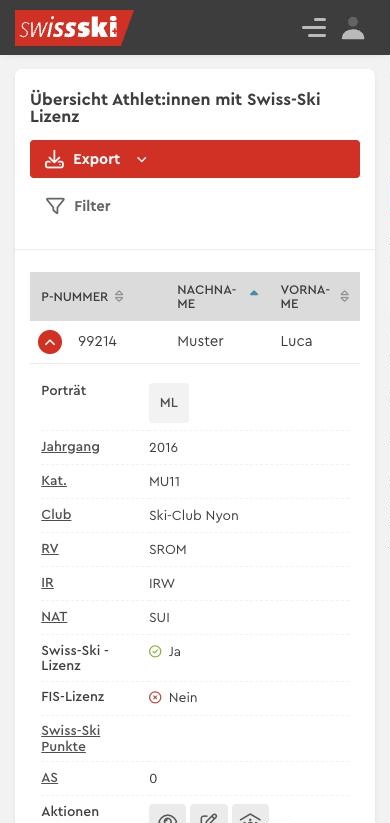
Swiss-Ski and FIS licences are managed in the system. Clubs maintain them for their athletes and apply for FIS licences directly via the platform.
The federation, regional associations, interregions, clubs and organisers have different permissions on the same data. Each role sees what it needs and changes only what it is allowed to. Duplicate profiles are merged after review.
Technical delegates and timekeepers are assigned per competition and write their reports directly in the system.
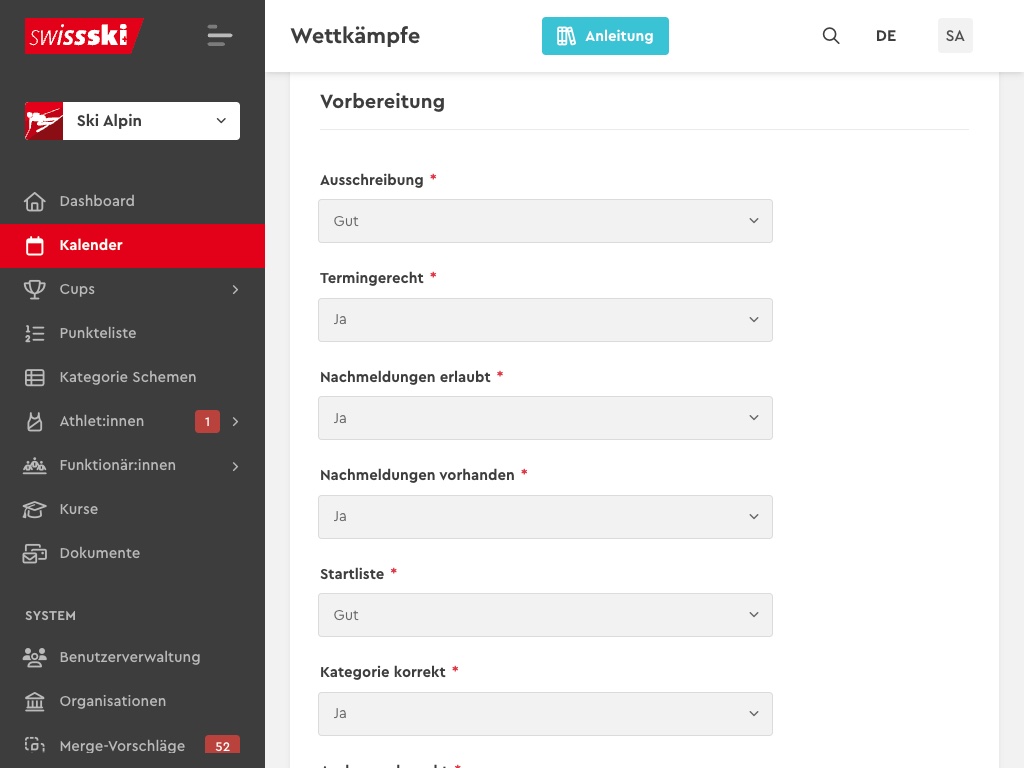
Applications for both roles run through the platform, as do the courses recognised for the continuing education requirement. After the race, the regional association, interregion and points office check the competition before it is closed.
A federation with regional associations and clubs means many voices. The approach had to include them without coming to a standstill.
Requirements came from the federation, regional associations, clubs and organisers. Priorities were set according to their impact on competition operations.
The season doesn’t wait. In defined work packages, whatever mattered for the next competition weekend went live each time.
Registration deadlines and the results upload after the race weekend are load peaks. The architecture is designed for them, not for the average day.
We’ll use this project to show you what a platform looks like that serves federation, clubs and members at the same time.